Since 2000, AIM (All India Movement) for Seva has been committed to changing the lives of children in rural India by providing access to holistic education and healthcare free of charge. Under the leadership of founder Swami Dayanand Saraswati, the organization has established a network of more than 130 schools, chatralayas (hostels), and hospitals across 16 Indian states.
Another pillar of AIM for Seva’s mission is to build bridges between India and the rest of the world through innovative programs like the Global Youth Leadership Program. Under this flagship program, high school students from the U.S. visit Manjakkudi, a village in Tamil Nadu, over their Christmas break. Over two weeks, the students immerse themselves into village life while teaching students and developing the curriculum at AIM for Seva’s chatralaya.
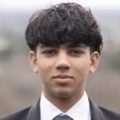
In 2023, San Jose teenager Ishan Davé was one of the 25 American students who had the opportunity to embark on this once-in-a-lifetime visit. Here’s his account of what happened.
***
A Christmas break unlike any other
After completing my calculus test and waiting for basketball practice, a casual conversation with friends opened up about my Christmas break plans. Unlike my usual holiday routine, this year was different. I was set to journey to India, not for a family event in Gujarat, but to a South Indian village with 25 other young Americans. My decision surprised my friends. Why swap a relaxing break for a trip to a remote Indian village?
My parents have always emphasized the importance of cultural and spiritual values. This curiosity about the differing values among youth in India and the USA grew in me. We’ve been involved with the All India Movement for Seva (AIMS), initiated by Pujya Swami Dayananda Saraswati. AIMS’s mission is to empower rural Indian children through education and housing facilities. They also run a Global Youth Leadership Program (GYLP), and this was my chance to participate. This program involves taking 25 high schoolers from across the USA to teach underprivileged children at a school established by AIMS in Manjakkudi, Tamil Nadu.
Setting off from the West Coast, I joined the other participants in New York before flying to Chennai. The journey to Manjukkudi was a mix of excitement and anticipation. We spent a night in Chennai at a plush hotel, before a six-hour bus ride to our destination, Manjakkudi.
Village life was a revelation. I expected simplicity, but the warmth and community spirit were beyond anything I’d anticipated. The close-knit community and its deep connection with nature challenged my preconceptions, offering a richer experience than I had imagined.
Life in Manjukkudi
In this village, every face was a story, every smile a demonstration of the resilience and contentment found in simple living. The people’s daily routines seamlessly intertwine with the rhythms of nature. Mornings began with birds chirping – a natural alarm clock that seemed to awaken everyone in the village. The streets, unpaved but clean, were alive with the chatter of children playing and elders sharing stories and wisdom on the front porches of their humble homes.
There was a sense of shared responsibility that bound the community together. Whether it was tending to the cornfields, or preparing meals in our dining hall, everyone played a role. This interdependence showed a strong bond among the people there, making me realize how isolated individualistic societies can sometimes be.
Each day was a mix of teaching math, English, and science, participating in community activities, and immersing in their daily lives. The day began at 6 a.m., followed by meditation, and then school from 8 in the morning to 3 in the afternoon. After school, everyone came together to play games like cricket, kabaddi, and carrom. The pace of life was very different from back home, and I felt a greater emphasis on community bonds in day-to-day life.
Food, an integral part of any culture, was a standout experience. Rasam and sambhar were permanent fixtures every day, to be eaten with dosas, idlis, and other traditional South Indian foods such as vadas. These authentic flavors – served on a banana leaf – were unique, although I occasionally missed the fusion flavors of Bay Area Indian cuisine.
My stint in Manjakkudi was more than just an educational trip; it was an immersion into the Indian community and culture. Visiting the ancient Thanjavur temple was a revelatory experience and I was transfixed by the incredible, lego-like architecture of the temple. We also visited an AIM for Seva-supported organic rice fields, where we learned about farm-to-table agriculture. These excursions added layers of understanding to my growing appreciation of Indian culture and heritage.
Reflections on a trip of experiential learning
Before this trip, my understanding of community was largely shaped by my American upbringing, where individual achievement often takes center stage, and community bonds, while valued, tend to be less visibly involved in daily life. I had an appreciation for my Indian heritage, but it was more of a background presence and not something I actively engaged with. I viewed it through a lens of nostalgia and tradition, and not a very prominent force in my life. The trip reinforced the importance of community and deepened my connection with my roots through the act of teaching. It was a bridge between my Indian heritage and American upbringing, offering a rare perspective on both worlds.
Community is vital as it roots us in a sense of belonging and shared purpose, acting as a cornerstone for personal and collective growth. In Manjakkudi, bonding with the community through everyday interactions, teaching, and participating in local customs, I found myself a part of village life. This immersion not only helped me understand the traditions and values passed down through generations but allowed me to feel like a part of something larger than myself.
My experiences in Manjakkudi have inspired me to take a step further with my own non-profit organization, Aionix. Currently, we are a nonprofit organization that targets older people and teaches them how to optimize their lives with the benefits of AI and similar technologies. As the founder, my vision is to harness the potential of Artificial Intelligence (AI) to positively impact these rural communities in India, starting with places like Manjukkudi. The idea is to unlock a world of possibilities through technology, a concept that may seem distant in such settings but holds immense potential for change.
My time in Manjakkudi was not just about teaching or learning, it was about connecting worlds, one story at a time. Would I do it again? Absolutely. It’s a journey I recommend to other Indian-American students as well. It’s more than learning about heritage; it’s about contributing to the education and lives of others, a transformative experience beyond academics.
Once again, I am extremely grateful to Pujya Swami Dayananda Saraswati and all other organizers of GYLP for giving me this wonderful opportunity.
Applications for the 2024 cohort of AIM for Seva’s Global Youth Leadership Program open on March 1, 2024. Click here to know more!